Minister Boekholt-O’Sullivan presented the Action Plan for Accelerating Housing Construction today in a letter to the House. The plan outlines 50 actions that will be implemented in the coming years, covering factory-built homes, rooftop additions, and grid congestion.
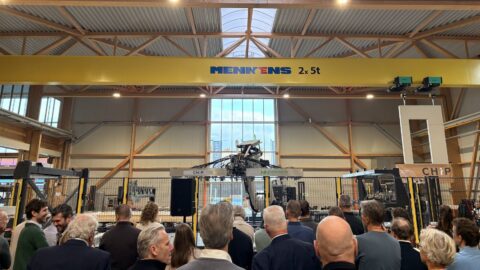
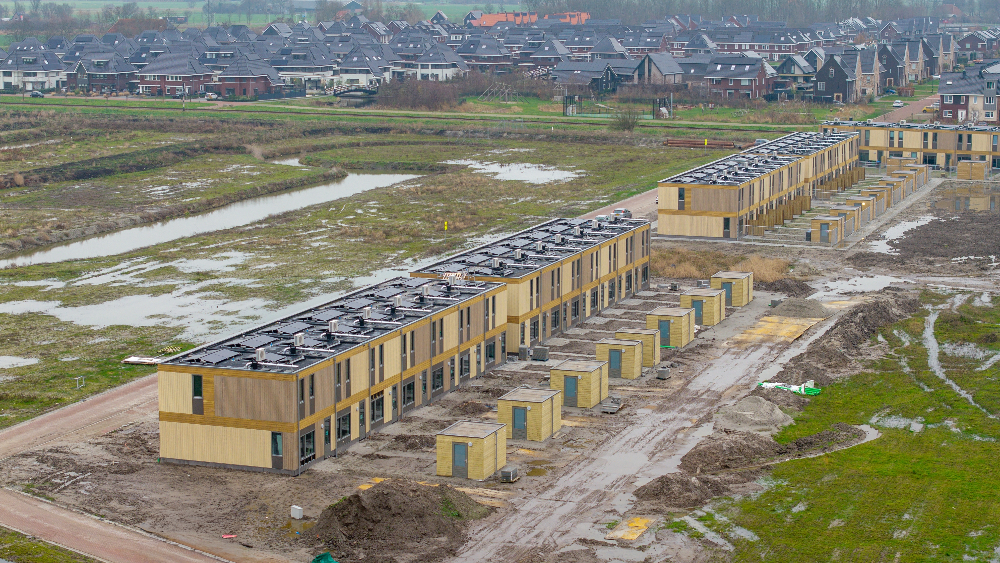
The minister sees the greatest benefit in shortening the lead time, she says in the letter. It must be reduced from an average of eight years to four. This can be achieved by digitizing the process and by allowing plans to proceed in parallel rather than sequentially. Furthermore, approved housing concepts should soon be able to be built without a separate building permit. This is because, by 2030, half of all new construction must come from factories.
Adding Stories and Renting
In addition to the five new construction sites the minister recently designated, another five will be added. These will be designated in the fall. But the focus isn’t solely on new construction; densification is also a priority. Through the National Approach to Better Utilization, the government aims to create 10,000 to 20,000 additional homes per year through adding stories, subdividing properties, shared housing, and renting out guest rooms.
Rental housing will also receive attention. There will be a push for affordable rental housing, which should give housing agencies and investors more opportunities to invest. A package of measures will also be implemented for private investors. The transfer tax for investors will be reduced, and a property subsidy for mid-range rental housing will be introduced.
Prerequisites
And regulations must be simplified and focused on accelerating the process. The cabinet must therefore ensure that the preconditions—such as capacity on the power grid, air quality, and nitrogen levels—are in order, the minister writes. Project developers, builders, and grid operators must therefore reach agreements on connecting new construction projects in a congestion-neutral manner.
Entire neighborhoods
Finally, the minister emphasizes neighborhoods that are ready for the future. Neighborhoods must be resilient to a changing climate, easily accessible, and have sufficient amenities, such as education and healthcare. “Neighborhoods where everyone has a need: the elderly and students, but also people with disabilities, people who exhibit confusing or misunderstood behavior, and other groups requiring special attention. The government, together with local and regional authorities, is taking responsibility with a simple, predictable, and consolidated budget. This will create a better link between physical and social infrastructure, allowing challenges such as housing, healthcare, employment, mobility, and green spaces to be addressed in a coordinated manner.”

This is an article from Construction and Installation Hub. Want to keep up with all the news from the construction and installation industry? Then take a look at the hub and sign up for the online community.
↗